
Buying guide
Semi-custom vs. custom cabinets: which one do you actually need?
Most New Hampshire kitchens we design don't need fully custom cabinetry — and the ones that do usually need it for one specific reason. Here's how to tell which camp your project is in before you start pricing.
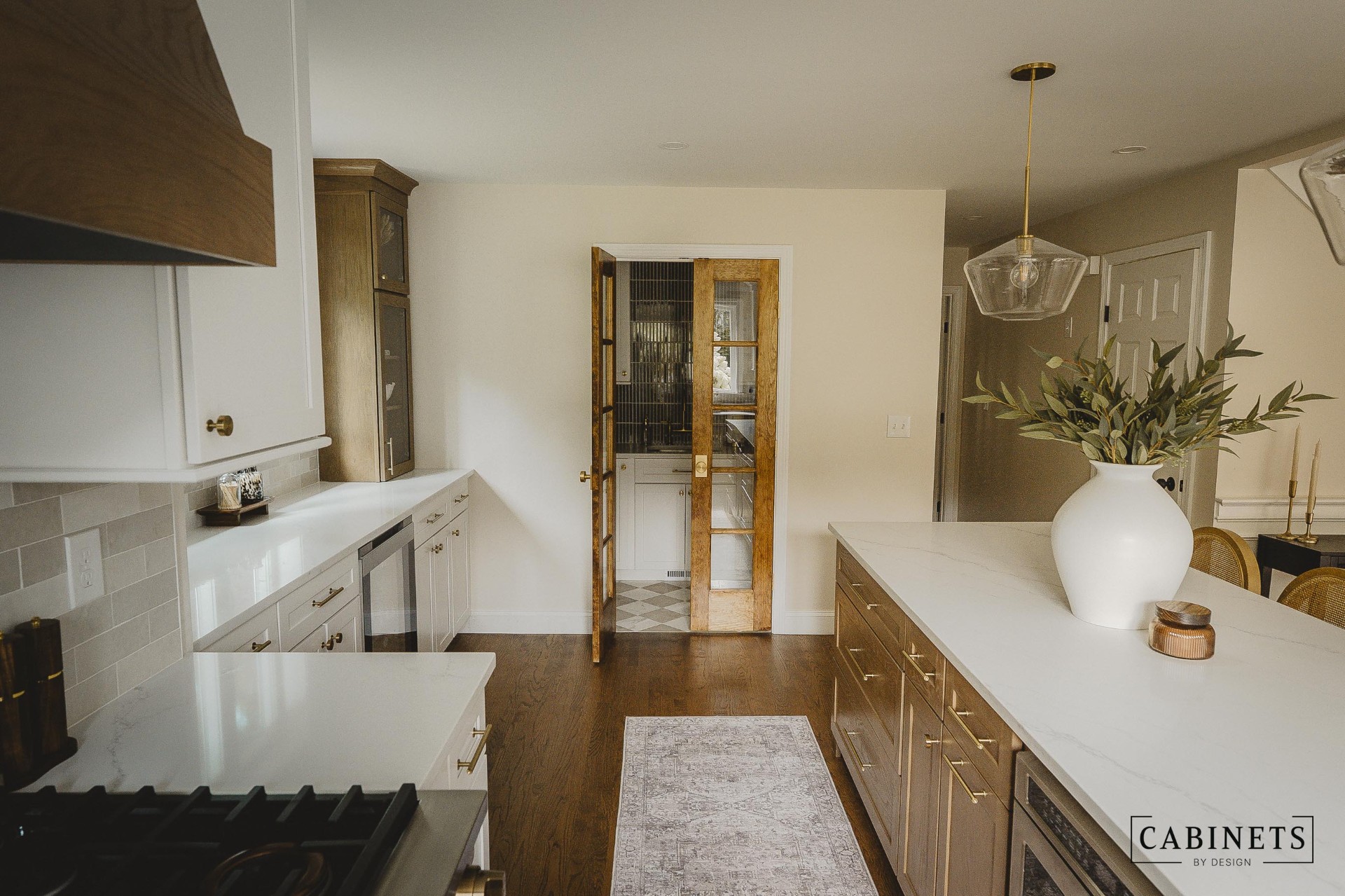
Semi-custom, in plain terms.
Semi-custom cabinets are factory-built to order from a catalog of widths, heights and depths — typically in three-inch steps, with one-inch or fractional modifications available. You choose door style, wood species, finish, interior upgrades and hardware. The box is made for your kitchen, not pulled off a shelf, but it's built inside a system.
Custom, in plain terms.
Custom cabinetry is built from scratch by a shop to whatever dimensions and details you specify. There is no catalog limit: unusual species, a run that's 43 and a half inches tall, a curved end panel, an exact match to 1920s trim. The tradeoff is cost, lead time and dependence on one shop's craftsmanship.
Where the fit difference actually shows.
In a standard eight-foot ceiling with square walls, filler panels and a well-planned layout make semi-custom look built-in — nobody can tell. The difference appears in old Nashua and Hollis homes with sloped ceilings, plaster walls out of square, or a nook that has to be filled wall to wall with no reveal.
Quality is a specification, not a category.
A semi-custom cabinet with a plywood box, full-extension soft-close slides and a factory catalyzed finish will outlast a custom cabinet built with particleboard and a hand-sprayed lacquer. Ask about box material, drawer construction, hinge and slide brand and finish process — in both cases.
What drives cost in either direction.
Door style complexity, finish (paint costs more than stain), glazing, tall heights, specialty interiors, and the number of modifications. A heavily modified semi-custom order can approach custom pricing, which is exactly when we tell a client to look at both.
Lead time is the deadline killer.
Semi-custom orders arrive on a predictable factory schedule. Custom shops build in queue after your design is approved, and the queue moves. If you want the kitchen done before Thanksgiving, the order date matters more than the door style.
How we decide with clients.
We measure, lay the room out both ways, and see whether the semi-custom system solves it cleanly. If it does — which is most of the time — you get the better value. If it doesn't, we say so plainly instead of forcing the catalog to fit your house.
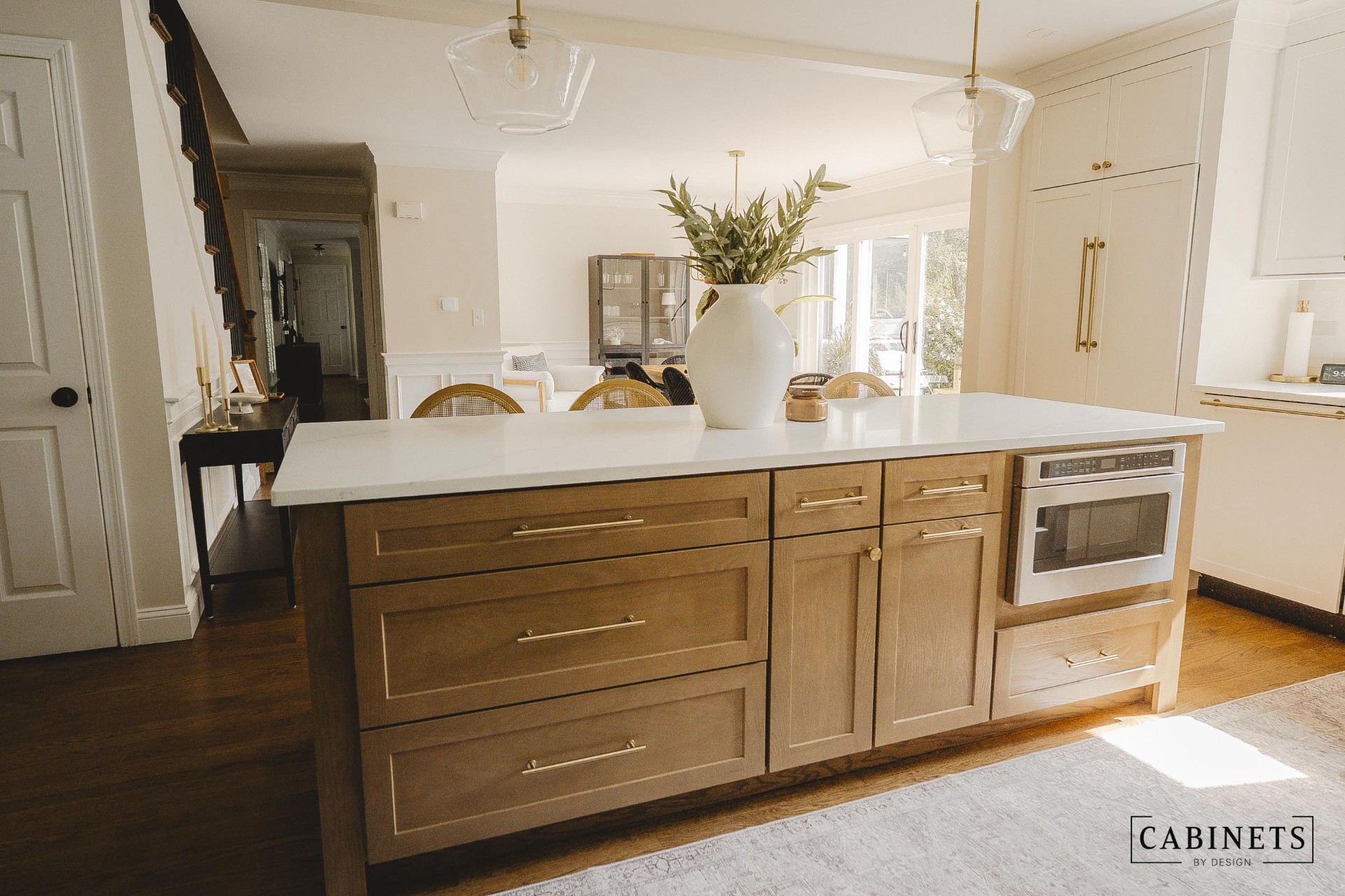
Semi-custom cabinetry in a real NH kitchen
Frequently asked questions
What is the real difference between semi-custom and custom cabinets?
Semi-custom cabinets are built to order from a manufacturer's catalog of sizes, door styles and finishes, with modifications available in small increments. Custom cabinets are built from scratch to any dimension, in any species or finish, usually by a local shop.
Are semi-custom cabinets good quality?
The lines we carry — Mantra, Diamond and Decorá — use plywood box options, full-extension soft-close hardware and factory finishes that are generally more durable than a hand-sprayed shop finish. Quality is about the specification, not the label.
When do you actually need full custom cabinetry?
Odd ceiling heights, curved or angled walls, historic homes with unusual proportions, an unusual species, or a built-in that has to match existing millwork exactly. In a typical Southern NH kitchen, semi-custom covers it.
How do lead times compare?
Semi-custom orders generally arrive in weeks; a local custom shop is often booked out further and builds after design approval. If you have a holiday or move-in deadline, that difference matters more than most people expect.
Also explore
Ready to plan your project?
Tell us about your space and we'll get back to you within 1 business day.
Or call 603-417-5908